Pricing the Invisible Tonne: A UK Exporter's Guide to CBAM's First Definitive Year
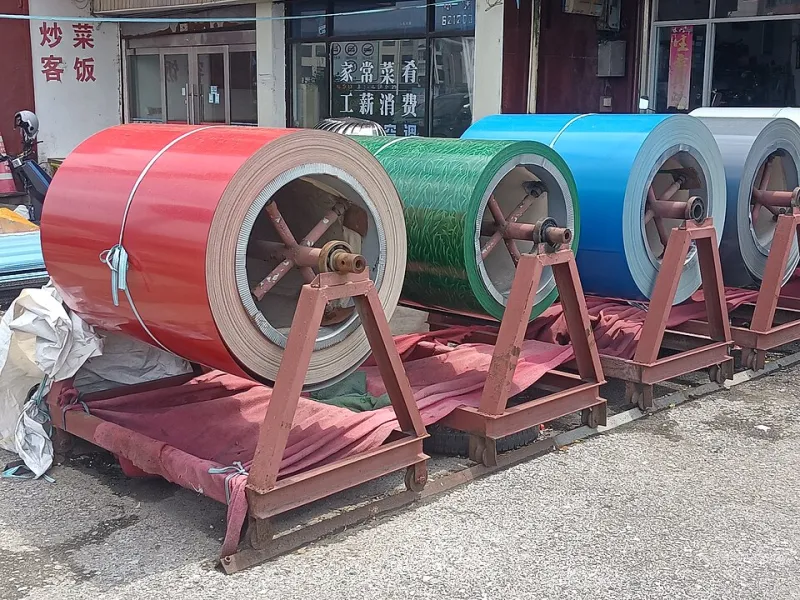
Photo: Fumikas Sagisavas, CC0, via Wikimedia Commons
For UK exporters of steel, aluminium, cement, fertiliser and other covered goods, 2026 is not a rehearsal. The EU's Carbon Border Adjustment Mechanism moved into its definitive phase on 1 January 2026: EU importers must now account for embedded emissions and surrender CBAM certificates, with the legal liability sitting with the authorised CBAM declarant in the EU. That legal fact is not the commercial fact. In most supply chains the cost travels backwards to the overseas producer, which means UK boards should already be treating CBAM as a pricing and margin issue rather than a customs annex.
The charge is not the paperwork
The first mistake is to read CBAM as a reporting obligation with a payment attached. It is the other way round. The payment is the point, and the reporting exists to calculate it. Certificate costs are linked to EU allowance prices and to the embedded emissions of the goods. Where actual supplier data is thin, default values apply and carry a mark-up. The result is predictable: exporters without a data chain pay more than they need to, and they discover the gap only when an EU customer asks for a price adjustment or refuses to absorb the charge.
That is why the board question is not whether the business is compliant. It is which product, which customer and which contract absorbs the carbon cost, and what happens when certificate prices move. A compliance team can file the paperwork. It cannot decide whether a long-term supply agreement has just become loss-making at the margin.
Where the practical gaps sit
Supplier emissions data is the first gap. CBAM calculations need installation-level information, production routes, precursor materials and a clear treatment of direct and indirect emissions. Many UK producers have energy bills and quality certificates, but not an emissions dataset that an EU customer can use. Building that dataset takes time, particularly where several sites or sub-suppliers feed one finished product.
Default values are the second gap. They are useful for a first estimate and for low-volume lines, but they are a poor long-term pricing base. An exporter that relies on defaults is effectively accepting a conservative carbon cost and handing the difference to a competitor with better data. The commercial question is not whether defaults are allowed; it is how much they cost over a year of shipments.
Verification is the third gap. Actual emissions data must be credible and independently verified under the EU rules. That means documentation, site access and a calendar. Exporters that wait until the first customer audit to prepare will find that verification is not a desktop exercise. It changes how production records are kept and who signs them off.
Contract clauses are the fourth gap. CBAM costs need a home. Supply agreements should say who provides emissions data, by when, in what format and at whose cost. They should address how the carbon charge is passed through, whether prices are fixed or indexed, and what happens if default values are used because data arrives late. Incoterms matter here, but they do not settle the commercial allocation of the charge. An indemnity clause that is silent on CBAM is an invitation to a margin dispute.
Who absorbs the charge is the fifth gap. Legally, the EU importer or authorised declarant carries the obligation. Commercially, the cost may be absorbed by the UK exporter, passed to the EU customer, shared through a formula or built into a revised price list. Each choice has a competitive consequence. A UK exporter that promises delivered prices without a carbon adjustment is writing an open-ended liability into a fixed-price contract.
A five-step readiness test
-
Map the exposure. Identify covered goods by CN code, the EU importers involved, annual volumes and the production routes behind each line. Do not stop at the invoice description; the classification and the embedded emissions profile are what matter.
-
Build the data chain. Establish which installation produces each good, which precursors are included and how electricity and heat are treated. Put a named owner against each data field and test whether the evidence would survive a verifier's questions.
-
Model default versus actual. Calculate the carbon cost per tonne and per SKU under both approaches. Add a sensitivity test for certificate prices and exchange rates. The output should be a margin number, not an emissions number.
-
Price and paper it. Decide which customer absorbs which cost. Draft data-cooperation clauses, pass-through formulas, audit rights and review triggers. Make sure sales teams are not quoting fixed prices that assume a carbon cost of zero.
-
Govern and verify. Set a reporting calendar, appoint an accountable executive and brief the board on the carbon cost line. If verification is required, book it early and treat the verifier's findings as a management issue, not a late-stage surprise.
The board question
CBAM is often described in Brussels language: reporting, verification, certificates. For a UK exporter, the clearer translation is this: a new cost line has entered the supply chain, and someone will pay it. The exporters that cope best will be those that turn emissions data into a negotiating asset, price the tonne before the customer does and write contracts that say where the charge lands. The ones that treat CBAM as paperwork will find that the invoice arrives anyway, with a mark-up attached.